
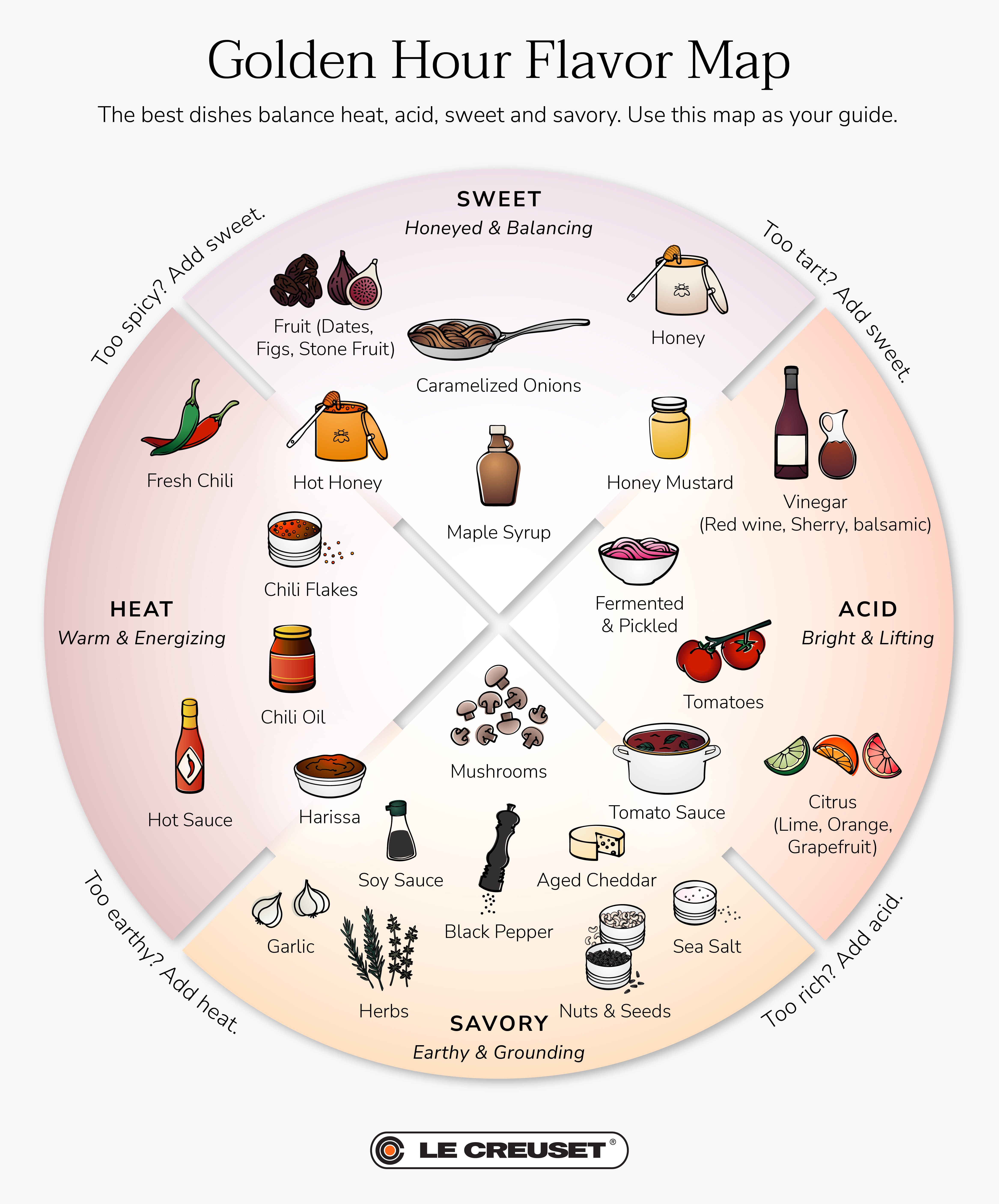
Cooking often comes down to how flavors are balanced. Heat, acid, sweetness and savory elements each play a role, with the most memorable dishes rooted in how they work together. The way a sauce is adjusted as it reduces, the way roasted vegetables shift from savory to sweet as they caramelize and the way a squeeze of citrus can change the entire direction of a dish just before it’s served aren’t separate techniques, but relationships that build structure, depth and flavor. Understanding how they interact is what allows a dish to feel complete, rather than simply assembled.
Understanding Flavor Balance
One of the easiest ways to think about flavor is through contrast and overlap. Most dishes are built from a combination of heat, acid, sweetness and savory depth, with each element helping to balance or amplify another. Once you begin to recognize key flavor pairings, they become easier to spot throughout the cooking process. A soup may need acid at the end to brighten richness. A roasted dish may benefit from herbs or citrus to bring contrast to caramelized flavors. Even something as simple as finishing with flaky salt or a drizzle of honey can completely shift the balance of a dish.
Heat and Sweet
Sweetness has a way of softening spice and making heat feel more rounded and layered. Hot honey is a simple example, where sweetness tempers intensity while still allowing warmth to come through. The same balance appears in smoky sauces, glazes and roasted dishes where caramelization naturally develops over heat.
Acid and Savory
Acid brings clarity to rich or savory foods, helping flavors feel brighter and more defined. Tomato sauce, vinaigrettes and citrus-based dressings all work this way, cutting through richness while adding structure and balance.
Sweet and Savory
As vegetables roast or onions slowly cook down, natural sugars begin to emerge and deepen into savory flavor. This balance is what gives caramelized vegetables, braises and gratins their richness and complexity without relying on heavy seasoning.
Heat and Acid
Heat paired with acid creates brightness and energy in a dish. Chili-lime combinations, peppery vinaigrettes and pickled veggies lift roasted or slow-cooked foods.
Heat and Savory
Heat and savory flavors work together to build depth and complexity. Spices like chili flakes and smoked paprika amplify the rich, umami notes found in ingredients such as mushrooms, aged cheeses and slow-cooked meats. This pairing creates a lingering warmth that feels robust and satisfying, making it a foundation for many stews, curries and roasted dishes.
Sweet and Acid
Acidity sharpens sweetness, while sweetness softens tartness, creating a more rounded and vibrant flavor profile. Balsamic vinegar drizzled on strawberries or a touch of honey stirred into a citrus dressing demonstrate how these flavors enhance one another.
Recipes That Bring Flavor into Balance
Each of these recipes highlights a different combination of heat, acid, sweetness and savory depth, showing how balance develops through cooking techniques, ingredients and finishing touches.

Smoky Chicken Tinga Tacos
Heat, smoke and acidity come together through a slow-simmered sauce, while fresh toppings brighten and balance the final dish.
Get the Recipe

Roasted Red Pepper Soup with Tahini and Feta
Roasted peppers bring natural sweetness, tahini adds richness and feta sharpens the soup with salt and tang.
Get the Recipe

White Bean, Zucchini and Cherry Tomato Braise
A slow-cooked combination of savory beans, sweet tomatoes and fresh zucchini that becomes richer and more balanced as it cooks.
Get the Recipe

Heirloom Tomato Gratin with Gruyère
Sweet roasted tomatoes and savory cheese create depth, while golden bread squares add texture and richness.
Get the Recipe

Honey Whole Wheat Bread with Herbs
Subtle sweetness from honey balances earthy whole grain and aromatic herbs, creating a loaf that feels both hearty and bright.
Get the Recipe

Braised Harvest Vegetables with Gremolata
Slow-braised vegetables develop deep savory sweetness, while a bright gremolata adds freshness, acidity and contrast just before serving.
Get the Recipe
Cooking with Balance in Mind
Flavor balance is not about following strict formulas. It’s about learning how ingredients respond to heat, seasoning and time. As you cook, pay attention to what a dish may be missing:
- Acid can brighten richness
- Sweetness can soften spice or bitterness
- Heat can add contrast and energy
- Savory ingredients help create depth and structure
Over time, these adjustments become instinctive, helping you cook with more confidence and flexibility regardless of the recipe in front of you.
Related Posts

Color Conversations: Discover Nectar
Read More

How to Use a Braiser in 4 Steps
Learn More

Hot Honey Brioche Grilled Cheese with Smoky Tomato Soup
Get the Recipe