In a large bowl, mix the water with the sourdough starter and pickle brine. Stir in the flour and salt until a shaggy dough forms. Using your hands, squeeze and mix the dough until evenly moistened and all the dry flour is incorporated.
Cover and let rest in a warm part of the kitchen for 1 hour. Add the pickles and dill and, using your hands, stretch and fold the dough over itself to evenly distribute. Cover and let rest for 3 hours more; stretch and fold the dough over itself every hour.
After the 4 hours, keep the bowl covered and let the dough rest at room temperature for 8 hours or overnight. At this point, the dough should be nearly doubled in bulk and jiggly.
Very lightly dust a work surface with bread flour. Scrape the dough onto the work surface; do not flour the dough. Working your way around the dough, gently stretch the side out and fold it over the center, forming a rustic oval loaf. Using a bench scraper, flip the dough so the folds are on the bottom and let rest for 10 minutes.
Meanwhile, line an oval proofing basket with a clean kitchen towel and dust it with rice flour.
Using a bench scraper positioned under the side of the dough furthest from you, gently pull the dough towards you across the work surface to form a taut oval loaf. Repeat this process 3 more times.
Using a bench scraper, quickly and carefully invert the dough into the prepared proofing basket. Lightly dust the top with rice flour, cover, and rest in the refrigerator overnight.
The next morning, preheat the oven to 500°F for at least 30 minutes. Brush the base of the bread oven with olive oil and invert it onto the basket, then quickly invert the dough onto it.
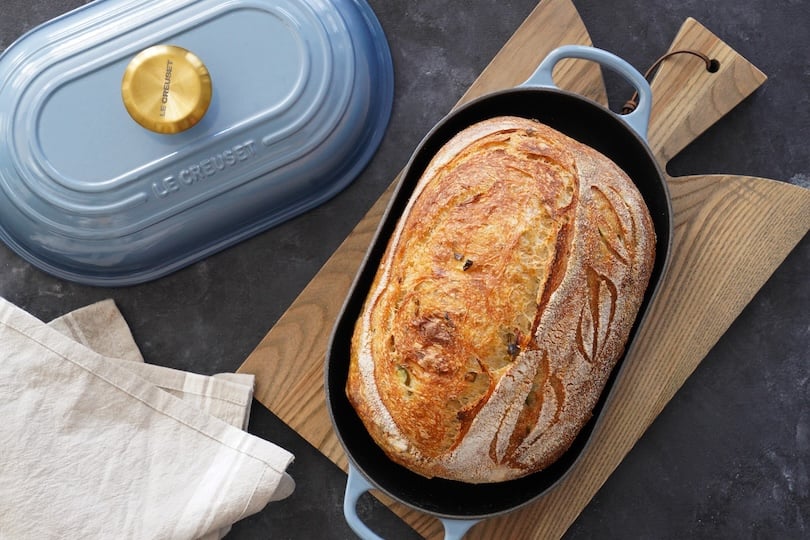
If preferred, dust the boule with rice flour. Using a razor blade, score the loaf decoratively (¼ to ½-inch deep). Cover the bread oven and place in the preheated oven. Reduce the temperature to 450°F and bake for 30 minutes, until the boule is risen.
Uncover the bread oven and continue to bake the loaf for 20-30 minutes more, until nicely browned. Immediately transfer the loaf to a rack and let cool completely before slicing.
Note: You know a sourdough starter is mature when it has active bubbles and when 1 tablespoon of it floats in a small bowl of water.