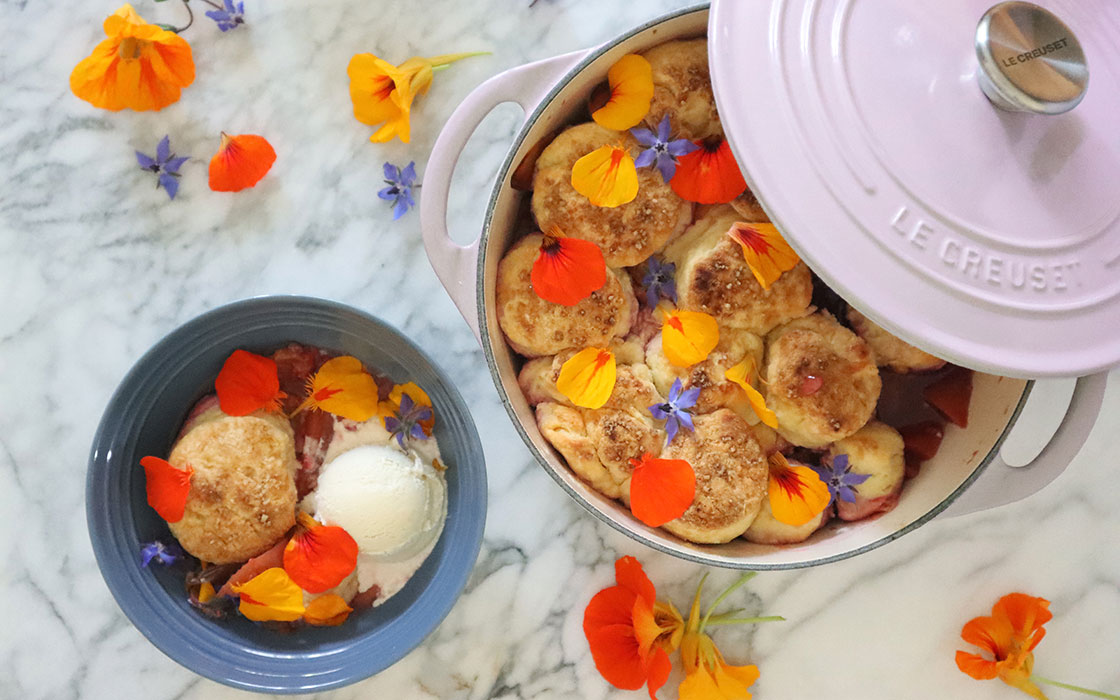
Summer is a time for gathering outdoors. We eat in the wild more during the warm, long days than we do any other time of year; think picnics, camping, backyard barbecues and birthday parties in the park. But just because we’re eating outside doesn’t mean the desserts can’t still be pretty, elegant and easy.
So we asked our friend, chef partner and baker extraordinaire Jennifer Latham to share with us her best summer baking advice that accomplishes all three of these objectives. Her go-to secret: decorate your desserts with edible flowers for maximum impact with little fuss. She also shared her tips on how to source and use edible flowers for baking, along with some delicious recipes that showcase the blooms of summer.
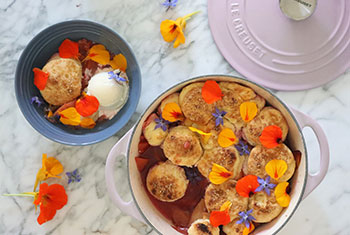
There are a few things to keep in mind when you’re brainstorming summer desserts for an occasion. For one thing, it needs to be sturdy and able to hold up to the hot sun or an ocean breeze. It’s also a good idea to find a beautiful dish to bake in and make something simple that can be served right out of the pot or dish. And lastly, whenever possible, decorate with flowers.
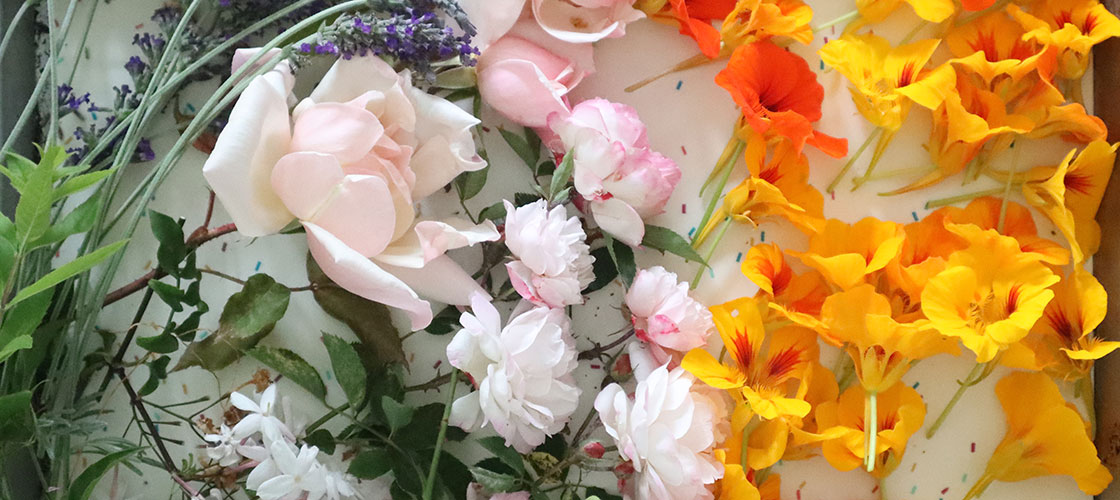
Early summer is the perfect time to use flowers for decoration. There is an abundance of buds that are going to be fruit later in the season but are pretty, fragrant, edible flowers now. Adding a few here and there makes anything look instantly chic and elegant. Here are a few of Jennifer’s favorite flowers to start with and be sure to try her flower-focused recipes below.
Roses, Nasturtiums, Borage, Calendula, Cornflowers,
Lemon blossoms, Pansies, Lavender, Clover and Fennel
How to Source and Use Edible Flowers
Here are a few tips for choosing edible flowers to use when garnishing summer desserts:
- Try foraging your own. Look to your garden or to a neighborhood community garden for flowers to use. The farmer’s market is also a great resource. Be careful using commercial flowers- they sometimes have pesticides that are not intended to come into contact with food. If you have a small local florist or famer they might know how their flowers were grown, otherwise, when in doubt, skip it.
- Look to the flowers of foods that you know are edible. Vegetable buds, lemon blossoms and herb flowers are all a great place to start. Many of these flowers are pungent - consider the flavor you are adding. I think pineapple sage flowers are beautiful, for example, but they are very fragrant and tend to overpower other flavors. Herb leaves can also be a great addition, think mint, lemon verbena or basil. These flavors are often very complementary to fruit, citrus or cream in desserts and can really elevate the whole dish.
- Use an app like Seek to identify something if you’re unsure about what it is. Google is also a great resource for finding out what is edible, just make sure you’re double-checking the source.
- Store blossoms on a damp paper towel in the refrigerator for a few hours before using. This both freshens them up and helps shake out any critters. If you do see any critters still clinging, a gentle rise in cold water should remove them.
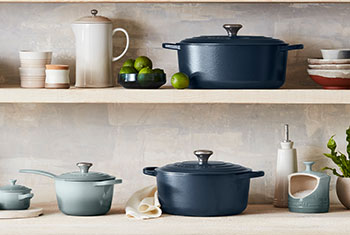
- Lastly, (and this is a fun one) try matching the colors of your flowers to your dish. it doesn’t have to be the same color but can be complementary, think blue cornflowers with a Chambray Dutch Oven, or light pink roses with a Shallot Mini Cocotte. Have fun with it! It’s really hard to go wrong when you’re sprinkling fresh petals over a summery and delicious dessert.