Knife selection shapes everything that follows: prep speed, ingredient integrity and the consistency of a finished dish. Each knife in a kitchen is designed around a specific task:
- Some are built for rocking through dense ingredients
- Some are designed for straight, precise slicing
- Some prioritize detail work
- Some are engineered to protect structure rather than break it
Whether you're chopping vegetables, carving proteins or performing detailed prep work, understanding which knife to use is the first step toward better results.

Why Choosing the Right Kitchen Knife Matters
Long before ingredients reach the pan, oven or grill, they are cut, portioned and prepared, and using the wrong knife can impact both efficiency and results:
- Uneven cuts lead to uneven cooking
- Larger pieces take longer to soften while smaller pieces overcook
- Dull or mismatched blades require more force and reduce precision
There is also a safety component that is often overlooked: most knife-related injuries happen when too much force is applied or when a blade is not appropriate for the ingredient. A sharp, well-matched knife provides greater control than a dull blade because it moves through ingredients cleanly instead of requiring excessive pressure.
How to Improve Your Knife Skills
Let the Knife Do the Work
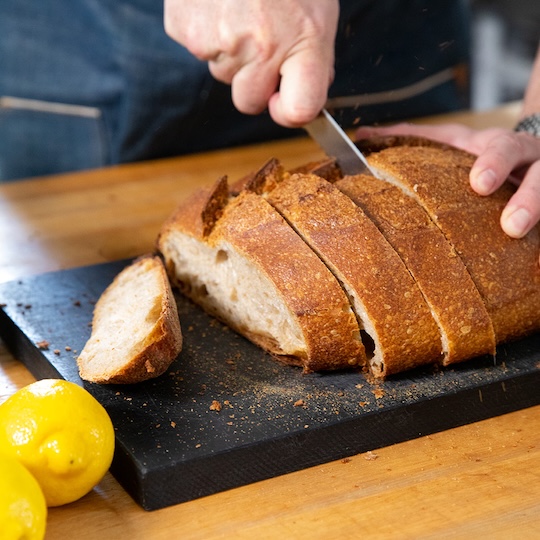
Your knife should move through food with minimal resistance. When technique is working correctly:
- The motion feels smooth rather than forced
- The blade does the cutting (instead of the hand providing pressure)
- Ingredients separate cleanly
- Soft foods slice without tearing or crushing
Match Blade Length to Ingredient Size
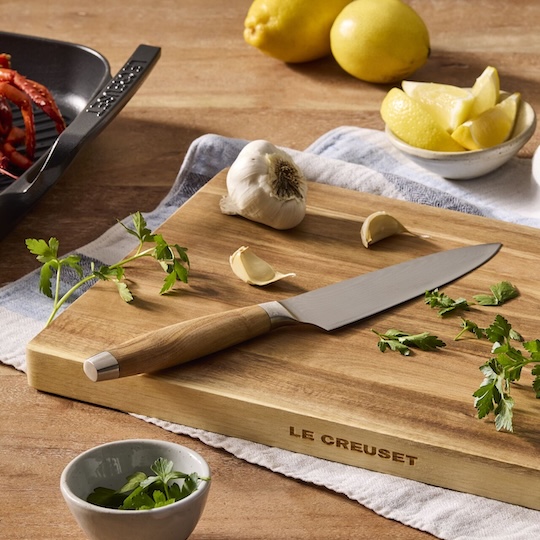
Blade length directly affects knife control and efficiency. Longer blades support continuous motion across larger ingredients, while shorter blades increase precision in smaller or more detailed work.
Le Creuset Chef's Knife >
- 6 in. Chef’s Knife: better control for herbs, garlic, small vegetables and quick prep work
- 8 in. Chef’s Knife: ideal for larger vegetables like squash, cabbage, and bulk ingredient breakdown
Le Creuset Santoku Knife >
- 5 in. Santoku Knife: ideal for tight cutting boards, detailed vegetable prep and controlled slicing with minimal hand movement
- 7 in. Santoku Knife: better for uniform slicing of larger vegetables and boneless proteins
Le Creuset Paring Knife >
- 3.5 in. blade ideal for peeling, trimming and slicing
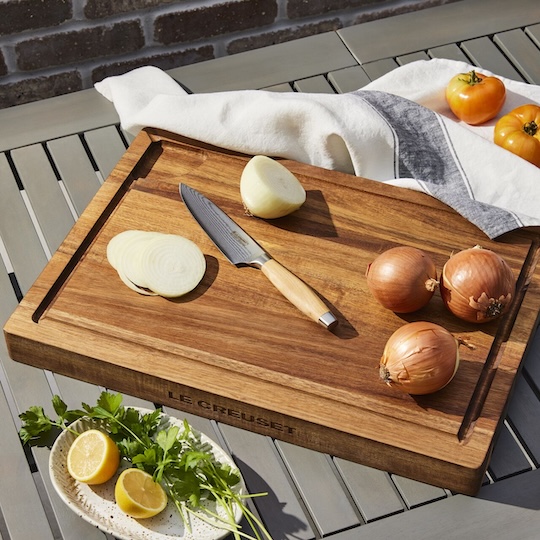
Keep Your Surface Stable and Cuts Consistent
A secure cutting board supports consistent technique and improves safety. Movement under the knife negatively impacts your control, while a stable surface supports the repeatable motion and reduces the need for corrections mid-cut.
When ingredients are cut to similar sizes, they cook at similar rates, impacting the texture, timing and overall results in the pan, oven or pot.
Shop Butcher Block Shop Paper Fiber Cutting BoardCommon Knife Cuts Every Home Cook Should Know
Knife cuts are the foundation of culinary technique. Before ingredients reach the heat, their size and shape determine how they will cook, soften, and integrate into a dish. From batonnet and julienne to brunoise and chiffonade, each cut serves a specific purpose in professional and home kitchens alike.

Types of Kitchen Knives and Their Uses
Different knives are designed for different motions, ingredients and preparation techniques.
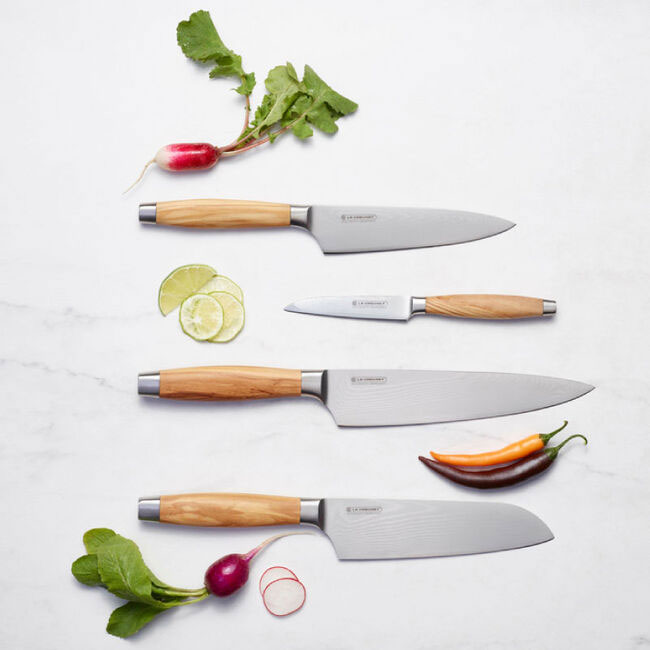
The guide below outlines the five knives in Le Creuset's assortment and explains when to use each one. Whether you're preparing herbs, slicing vegetables, carving proteins or serving a roast, selecting the appropriate knife improves both efficiency and precision.

Shop Le Creuset Knives




Complete Your Prep Station

Magnetic Knife Block
Store knives easily while keeping them within reach
Shop

Knife Sharpener
Maintain blade performance and edge retention between sharpening
Shop

Set of 3 Paper Fiber Cutting Boards
Create a stable, durable work surface for everyday preparation
Shop
Frequently Asked Questions
What is the most versatile kitchen knife?
A chef’s knife is generally considered the most versatile kitchen knife because it can handle chopping, slicing, dicing and mincing across a wide variety of ingredients.
What is the difference between a chef’s knife and a santoku knife?
A chef’s knife is designed for rocking motions, while a santoku knife is optimized for straight, precise slicing and chopping.
Why is a sharp knife safer than a dull knife?
A sharp knife requires less force to cut through ingredients, providing greater control and reducing the likelihood of slipping.
Which knife should I use for bread?
A bread knife’s serrated edge is designed to cut through crusty exteriors while preserving soft interiors.
Which kitchen knife should I buy first?
If you're building a collection, start with a chef's knife. It’s a versatile option for everyday prep and can handle a wide range of tasks, from vegetables and herbs to proteins.
When should I use a paring knife?
A paring knife is best for tasks that require precision and control, such as peeling, trimming, coring fruit, deveining shrimp, or preparing garnishes.
What is a slicing knife used for?
A slicing knife is designed for carving and serving cooked proteins. Its long, narrow blade creates clean, even slices of roasts, poultry, fish, and other large cuts of meat.
How often should kitchen knives be sharpened?
Sharpening frequency depends on usage, but regular maintenance helps preserve performance. If a knife begins crushing ingredients instead of slicing cleanly, it is time to restore the edge.
What makes Le Creuset knives different?
Le Creuset knives are forged in Solingen, Germany, a region renowned for knife making craftsmanship. Each knife features 64 layers of Damascus steel folded around a VG-10 steel core, creating a blade that is both durable and capable of maintaining a finely sharp edge. Finished with an Italian olive wood handle, the collection combines performance-driven construction with a comfortable grip for everyday kitchen tasks.
Related Posts

Kitchen Tools
Shop

Which Le Creuset Skillet is Right for You?
Read More

Discover the Signature Oval Bread Oven
Read More