Stainless steel cookware is a favorite among professional chefs for a reason, offering unmatched durability, control, even heating and the ability to build deep flavor. Yet for many home cooks, stainless steel can feel intimidating. Concerns about sticking, scorching or cleanup often leads people to shy away from it altogether.
The truth is that stainless steel isn’t difficult, it simply rewards good technique. Once you understand how it behaves, it becomes one of the most versatile and reliable materials in the kitchen. Here are some of the most common mistakes home cooks make when cooking with stainless steel, and how to avoid them with confidence.
Shop Stainless Steel Cookware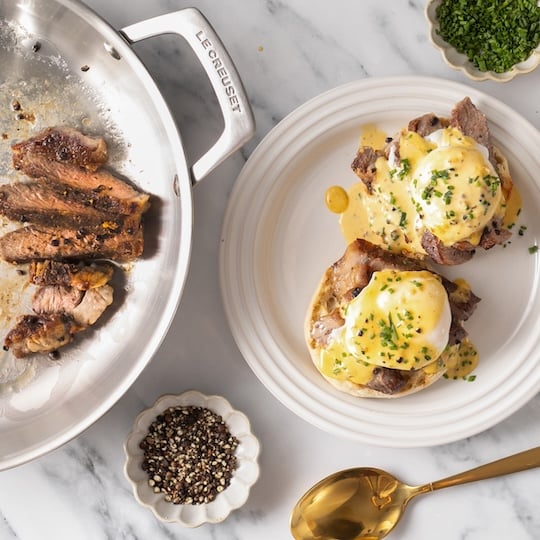
Mistake #1: Expecting Stainless Steel to Behave Like Non-stick
Many home cooks approach stainless steel expecting zero resistance, which leads to frustration when food sticks initially.
THE FIX:
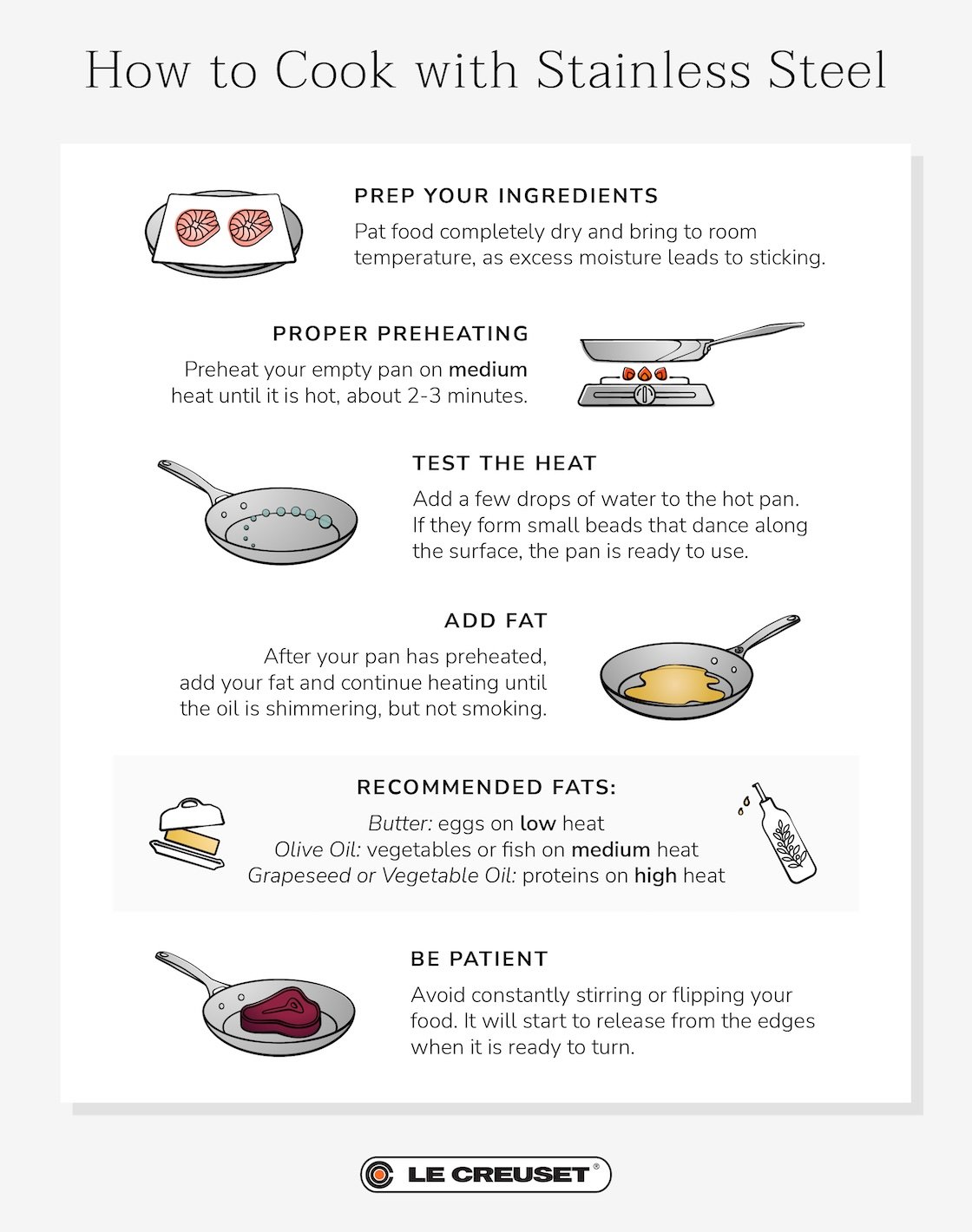
Every type of cookware has its place in the kitchen, and choosing the right material for the task makes all the difference. Stainless steel isn’t non-stick by design—and that’s a strength. Proper preheating and the use of fat create a temporary non-stick effect, while a bit of controlled sticking encourages better browning and deeper flavor. Once expectations shift, stainless steel becomes an intuitive, highly rewarding tool to cook with.
Get the Recipe: Steak au Poivre Benedict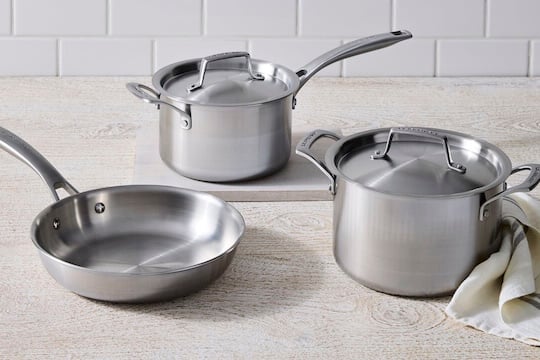
Mistake #2: Starting with a Cold Pan
One of the most common stainless steel missteps is adding food to a pan before it is properly heated. A cold pan increases the likelihood of sticking and uneven browning.
THE FIX:
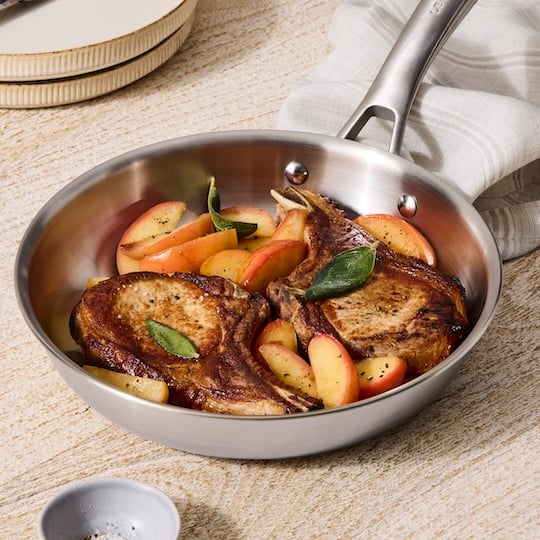
Always preheat your empty pan over medium heat for 2-3 minutes. To test readiness, add a few drops of water; if they bead up and glide across the surface, the pan is ready. Proper preheating allows proteins to sear cleanly and release naturally when they are ready to flip.
Get the Recipe: Bone-in Pork Chops with Apples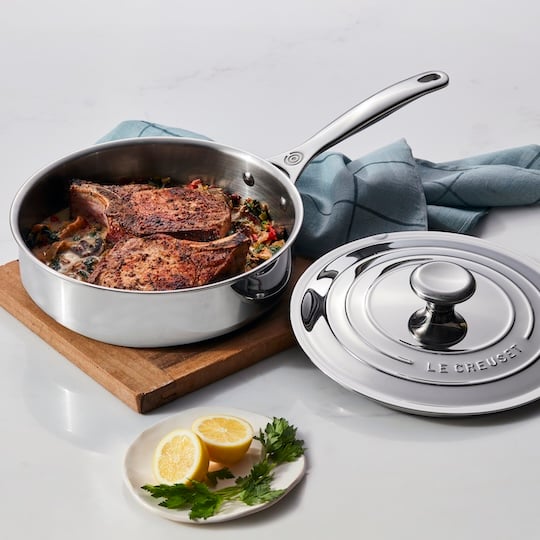
Mistake #3: Adding Oil Too Early or Too Late
Timing matters when it comes to fat. Adding oil to a cold pan can cause it to absorb into the metal, while adding oil to an overheated pan can lead to smoking and bitter flavors.
THE FIX:
Once the pan is hot, add your fat and heat it just until shimmering, not smoking, before adding ingredients. Choose fats appropriate to the heat level: butter for low heat, olive oil for medium heat, and grapeseed or vegetable oil for higher temperatures. We don’t recommend using cooking sprays, which can leave a sticky residue on the pan’s surface that can build up over time.
Mistake #4: Cooking with Wet or Cold Ingredients
Moisture is the enemy of a good sear. Excess water or cold proteins straight from the refrigerator can cause food to stick and steam rather than brown.
THE FIX:
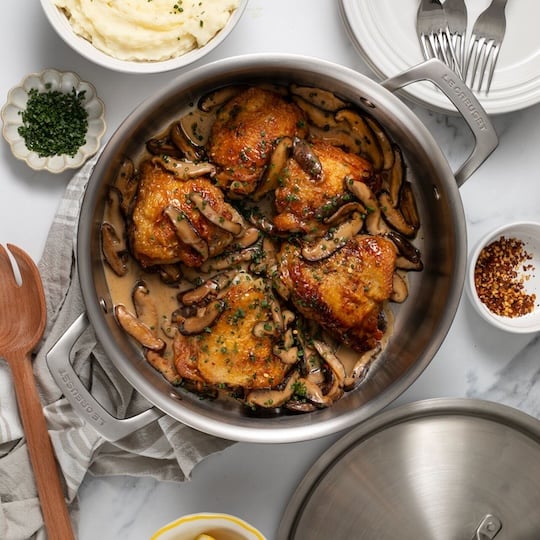
Pat ingredients thoroughly dry and allow proteins to come to room temperature before cooking (about 15-30 minutes). This promotes even browning and helps food release cleanly from the pan.
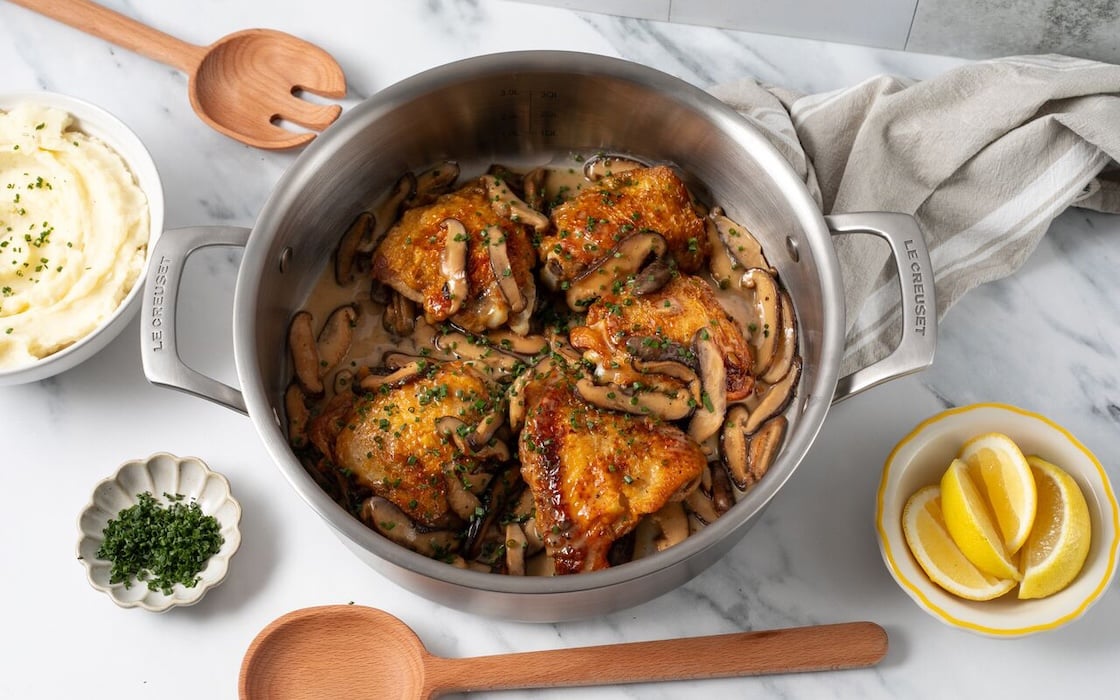
Get the Recipe: Crispy Chicken Thighs with Marsala Sauce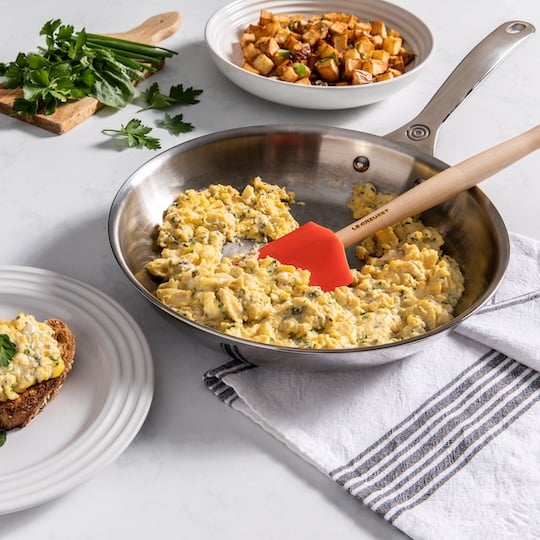
Mistake #5: Turning Food Too Soon
It’s tempting to want to move food constantly, especially if you’re worried about sticking, but this often makes things worse.
THE FIX:
Be patient. When properly seared, food will release on its own. If it resists when you try to flip it, give it more time. Stainless steel excels at developing fond, which are the flavorful browned bits left behind on the bottom of the pan. They are the key to richly flavored pan sauces and depth of flavor.
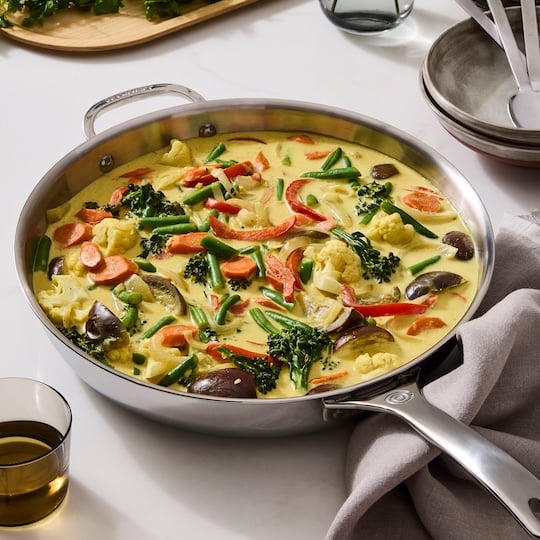
Mistake #6: Using Heat That is Too High
High heat isn’t always better. Overheating stainless steel can lead to scorching, uneven cooking and unnecessary burning and sticking.
THE FIX:
Medium to medium-high heat is ideal for most tasks because of the superior responsiveness of Le Creuset stainless steel cookware. Because of the aluminum core in our tri-ply stainless steel pans, it also responds quickly to changes in temperature so you can adjust as you go. Controlled heat gives you better results and more confidence.
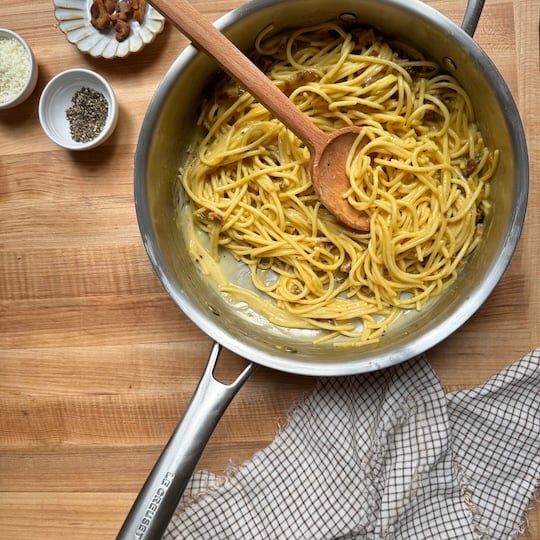
Mistake #7: Avoiding Fond Instead of Using It
Those browned bits at the bottom of the pan aren’t a problem, they’re an opportunity.
THE FIX:
Deglaze the pan with wine, stock or even water to lift fond and create a sauce right in the pan. This is one of stainless steel’s greatest strengths and a hallmark of classic cooking technique. Bonus that this technique also helps speed up cleanup.
Get the Recipe: Pasta alla Carbonara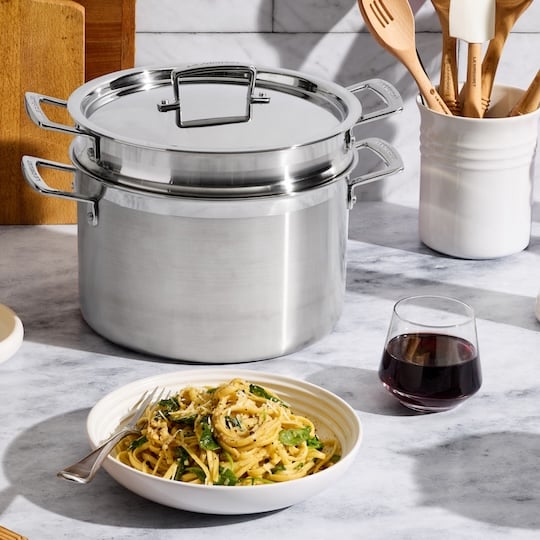
Mistake #8: Overthinking Cleanup
Many cooks avoid stainless steel because they worry it’s hard to clean, but most messes are easily managed.
THE FIX:
Never run a hot pan under cold water as it can warp the metal over time. Instead, allow pans to cool before washing, then clean with warm water, mild dish soap (or our Pots and Pans Cleaner) and a soft sponge. For stubborn residue, fill the pan with warm soapy water and bring to a boil to loosen stuck-on food before wiping clean. Dry thoroughly to prevent water spots.
Cook Smarter, Not Harder
Le Creuset stainless steel cookware is designed for performance, but it simply asks for a little intention in return. With proper preheating, patience and care, it becomes an indispensable tool in your kitchen arsenal that is ideal for searing, sautéing, simmering and building flavor.
Once these common mistakes are out of the way, stainless steel stops feeling intimidating and starts feeling intuitive. It’s cookware designed for performance and durability that supports confident cooking, meal after meal.