At the edge of the harvest, peak-season vegetables are at their most adaptable, shifting easily between raw, roasted, braised, and baked preparations. Gardens and farmers market stalls overflow with sun-ripened tomatoes, sweet corn, vibrant peppers, zucchini, green beans and tender herbs. It's the moment where ingredients move from garden to gathering, vine to grill, root to roast and bread to break.
The same vegetable can be prepared in multiple ways depending on texture, moisture, and desired depth of flavor. Understanding how different vegetables respond to various cooking methods helps you make the most of the harvest.
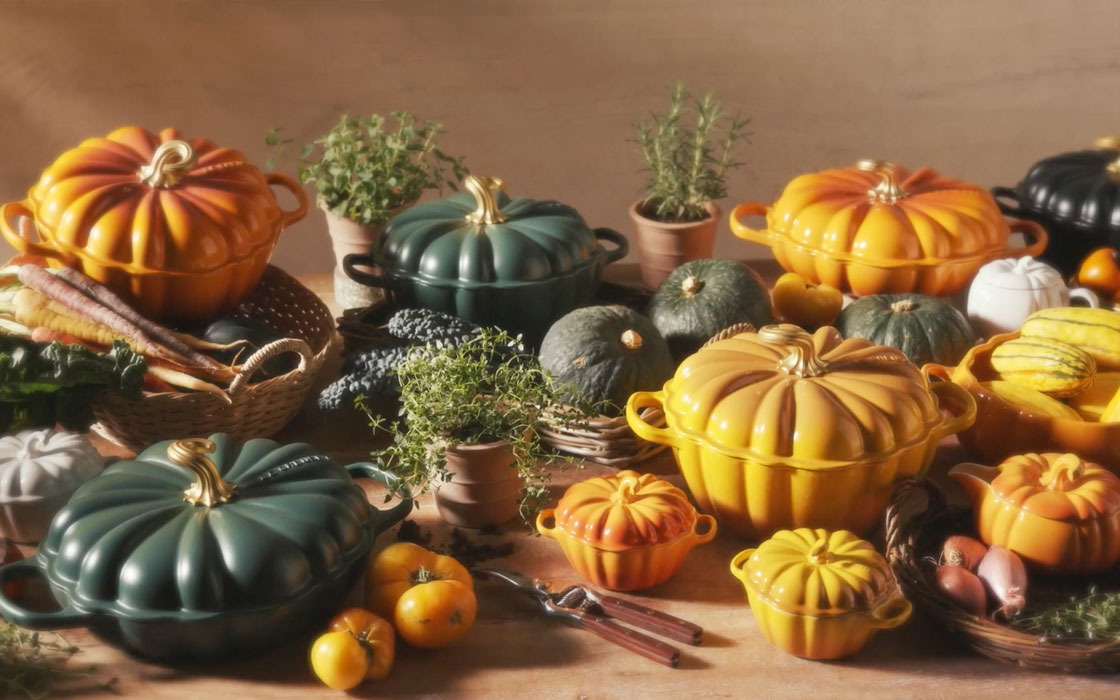
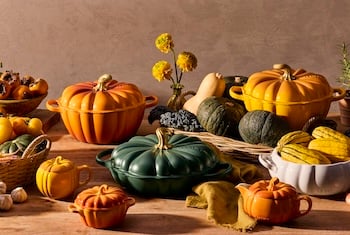
Inspired by this transition, Le Creuset's Harvest Collection draws from the textures and tones found just beyond the garden gate, where heirloom pumpkins rest among tangled vines and every ingredient tells the story of the season. Rooted in a timeless fairytale design, the enameled cast iron and stoneware assortment reflects the beauty of the harvest while bringing exceptional versatility from kitchen to table.
Shop the Harvest Collection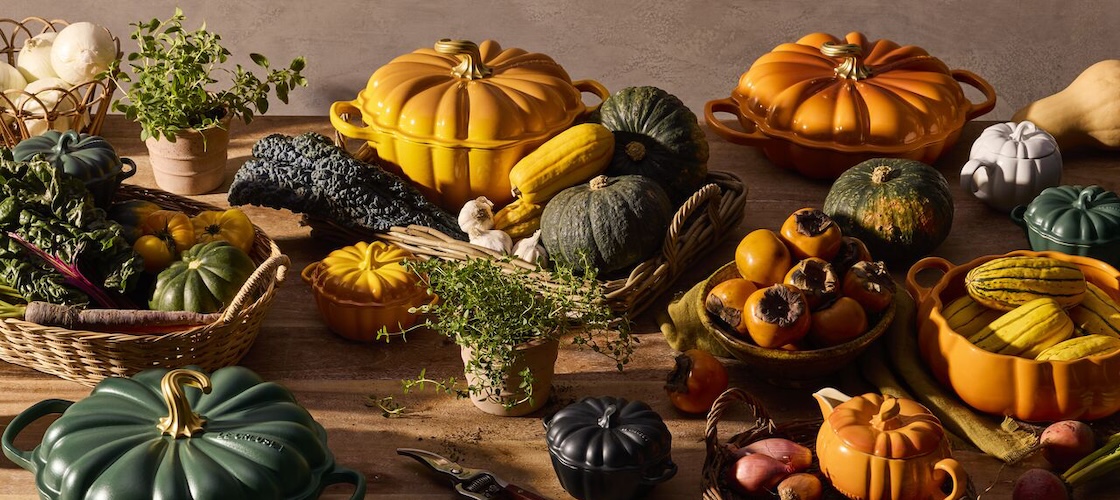
Understanding Your Harvest Vegetables
Not all vegetables behave the same in the kitchen. Some soften quickly under heat, others concentrate and deepen in flavor, and some hold their structure even through long cooking. Understanding these differences helps you choose the right technique for the result you want.
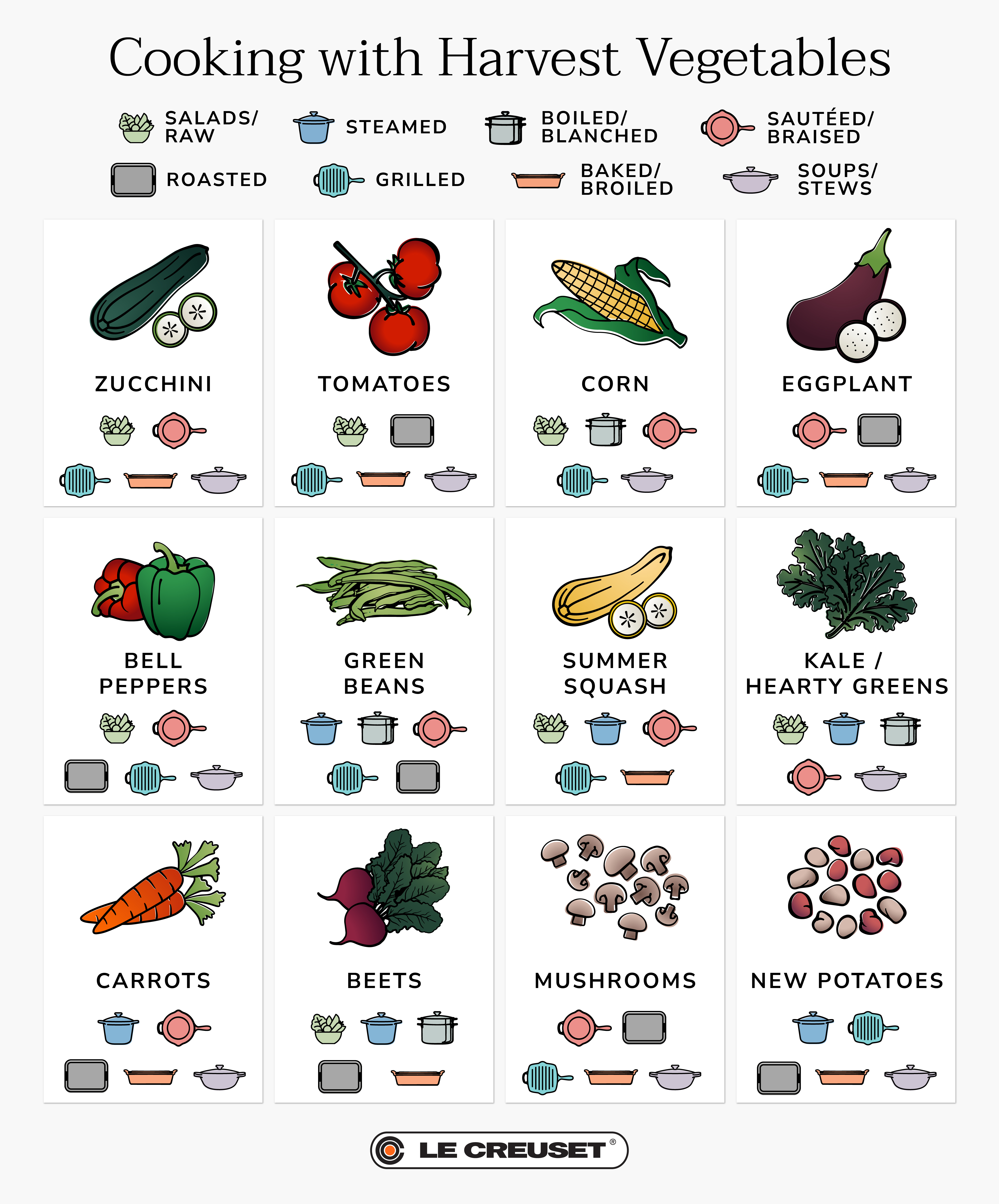
- High-moisture vegetables such as tomatoes, zucchini, and eggplant are ideal for roasting, braising, and baking. They break down easily, creating concentrated flavor and rich texture.
- Structured vegetables like peppers, green beans, and corn hold their shape well. They respond best to grilling, sautéing, or blistering over high heat.
- Starchy vegetables such as squash and root vegetables become naturally sweet when roasted or braised, making them ideal for soups, purées, and layered baked dishes.
Cooking Peak-Season Vegetables
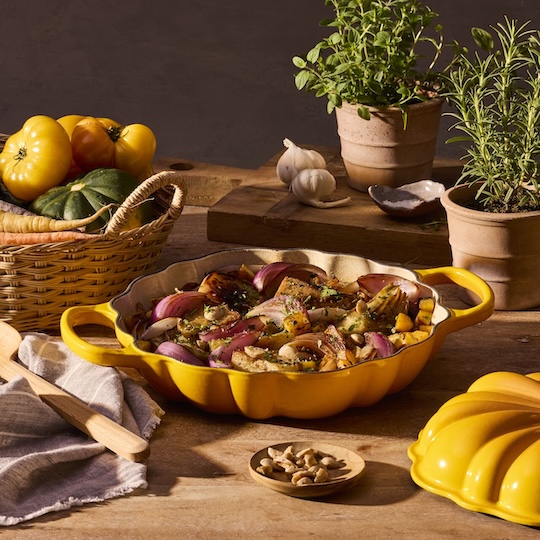
Braising and Roasting
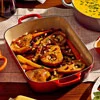
Rooted in simplicity, this dish brings together fennel, squash, and root vegetables in a light, aromatic braise. Roasting the vegetables at first builds depth and caramelization, while a gentle braise with white wine, citrus and herbs keeps the flavors bright. The fennel and parsley gremolata garnish adds a fresh, vibrant contrast, making this a composed, seasonal side that celebrates the best of the seasonal harvest.
Get the Recipe: Braised Harvest Vegetables with Gremolata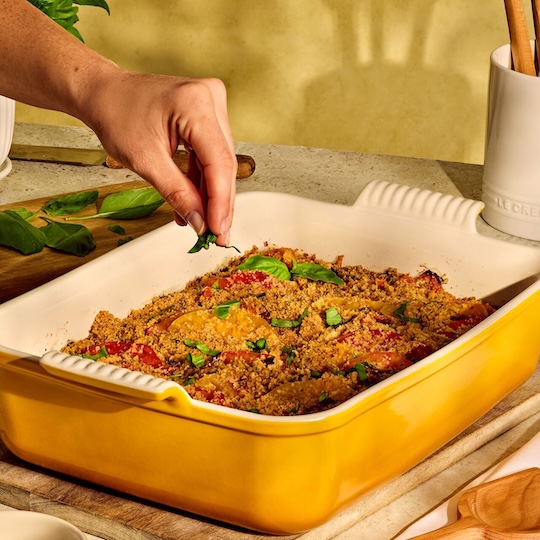
Baking & Gratins
Peak-season tomatoes require little intervention. In this rustic gratin, heirloom tomatoes layered over cubed baguette, Gruyère and cream, then baked until the edges turn golden and the center settles into something softly set and deeply savory. Few dishes celebrate peak-season tomatoes more simply.
Get the Recipe: Heirloom Tomato Gratin with Gruyère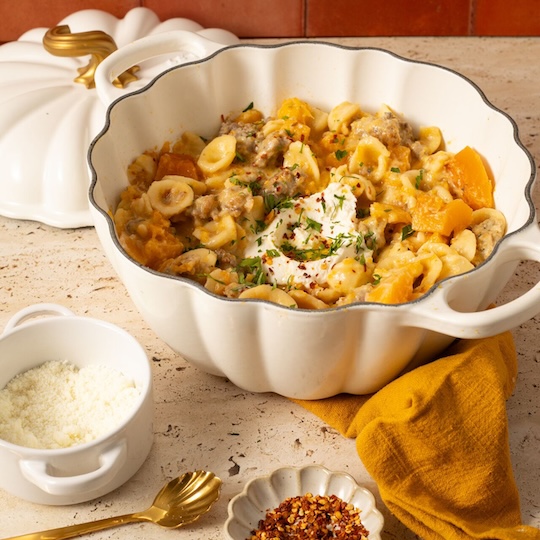
Simmering & Sauces
While summer still lingers, the first hints of transition appear in dishes like this. Butternut squash is simmered into a silky sauce that clings to orecchiette, enriched with savory Italian sausage and finished with fresh herbs. It bridges two seasons at once: the brightness of the harvest and the deeper comfort of what is to come.
Get the Recipe: Creamy Butternut Squash Orecchiette with Italian Sausage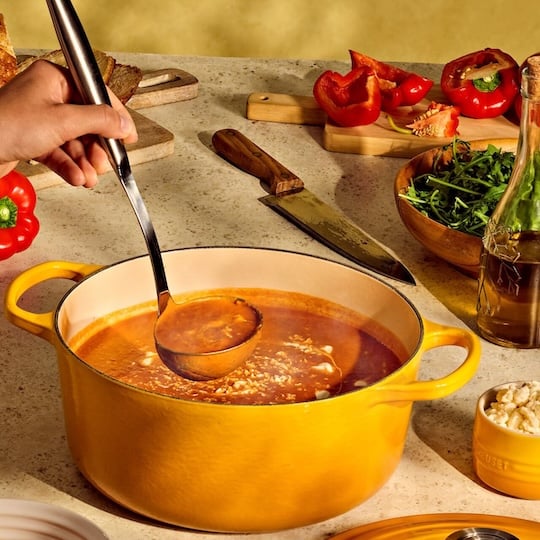
Soups & Stews
A foundational harvest soup works as both a simple weeknight meal and an elegant seasonal starter. Roasting red peppers deepens their natural sweetness before they are blended into a smooth, velvety soup, layered with creamy tahini and finished with tangy feta for contrast.
Get the Recipe: Roasted Red Pepper Soup with Tahini and FetaTechniques for Cooking at the Edge of the Harvest
Not sure which method to use? Use the guide below to explore the ways harvest vegetables can move from raw to roasted, sautéed and simmered, and make the most of what's in season.
Related Posts
Set the Table for the Season
Shop the Harvest Collection

Honey Whole Wheat Bread with Herbs
Get the Recipe

Chicken Tinga Tacos
Get the Recipe